


Considerations for 50 Ton Overhead Crane Runway Beam Design in Steel Workshops

The integration of a 50-ton overhead crane into a steel workshop is a complex engineering task that requires careful planning and design. One of the most critical elements in this process is the design of the crane runway beams, as these beams directly support the crane's load, ensure operational safety, and influence the overall efficiency of workshop operations. Proper runway beam design is essential to guarantee the structural integrity of the workshop, prevent costly downtime, and extend the lifespan of both the crane and the building.

Understanding the Role of Runway Beams
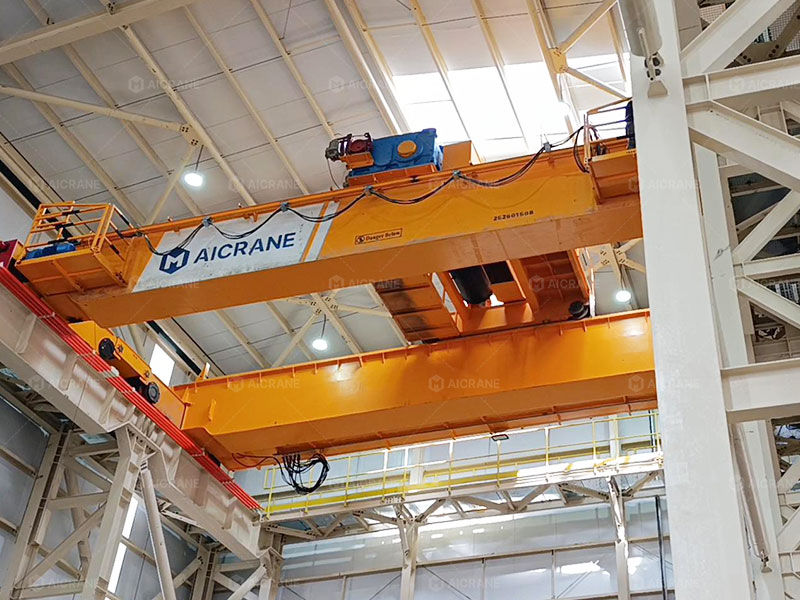
Runway beams are the longitudinal structural elements that support overhead cranes, allowing them to traverse the length of the workshop. For a 50 ton overhead crane, these beams must be capable of handling significant vertical loads from the crane hoist, horizontal forces due to acceleration and deceleration, and dynamic impacts caused by crane operation. In steel workshops, where heavy machinery and large structural components are handled, the demands on runway beams are particularly high.
The main functions of runway beams include:
Supporting Vertical Loads: Runway beams must bear the weight of the crane itself, the hoist, the trolley, and the load being lifted.
Resisting Horizontal Forces: During operation, cranes generate horizontal forces due to starting, stopping, and trolley movement. Runway beams must resist these forces without excessive deflection or vibration.
Ensuring Alignment and Stability: The beams provide a straight and level path for the crane, which is essential for safe and precise lifting operations.
Key Considerations for Runway Beam Design
Designing runway beams for a 50-ton crane involves multiple factors, including structural integrity, workshop layout, load characteristics, and compliance with industry standards. The following considerations are crucial:
1. Load Analysis
Accurate load estimation is the first step in designing runway beams. The loads include:
Crane Dead Load: The weight of the crane itself, including the bridge girder, trolley, hoist, and end trucks.
Lifting Load: The maximum rated load, which in this case is 50 tons. Engineers must also consider the dynamic effects, typically adding 10–25% to account for impact and acceleration.
Impact Factor: The movement of the crane and lifting operations generates dynamic forces. The impact factor is especially important for heavy-duty cranes like a 50-ton model.
Load Distribution: The load is transferred from the crane wheels to the runway beams, and proper wheel load calculations must be conducted to prevent overstressing the beams.
2. Beam Material Selection
Steel is the standard material for runway beams in industrial steel structure workshops. Key factors to consider include:
Yield Strength: High-strength structural steel, such as S355 or equivalent, is preferred to handle heavy loads with minimal deflection.
Durability: Steel beams should be resistant to fatigue caused by repeated loading cycles.
Corrosion Protection: In workshops with high humidity or exposure to chemicals, corrosion-resistant coatings or galvanization can extend the life of the beams.
3. Beam Profile and Dimensions
The beam’s cross-section significantly influences its load-bearing capacity. Common profiles include I-beams, H-beams, and box sections. Design considerations include:
Moment of Inertia: Beams with higher moments of inertia resist bending and deflection more effectively.
Span and Support Spacing: Longer spans require deeper or stronger beams to prevent excessive deflection.
Crane Rail Attachment: The top flange of the runway beam must support the crane rails securely, ensuring accurate alignment.

4. Deflection Limits
Excessive deflection of the runway beam can compromise crane operation and safety. Standards, such as those from CMAA (Crane Manufacturers Association of America) and FEM (Fédération Européenne de la Manutention), provide guidelines on allowable deflection:
Vertical Deflection: Typically limited to L/600 to L/800, where L is the span between supports.
Twist and Lateral Deflection: Must be minimized to prevent misalignment of crane wheels and potential derailment.
5. Workshop Structural Integration
Runway beams must integrate seamlessly with the existing steel workshop structure. Key aspects include:
Column Design: Columns supporting the runway beams must withstand vertical and horizontal loads transmitted by the crane.
Beam-to-Column Connections: Connections must be rigid enough to prevent excessive rotation but flexible enough to accommodate thermal expansion and building movement.
Foundation Considerations: Runway columns may require reinforced foundations to prevent settlement under heavy crane loads.
6. Crane Rail Installation
The rails are mounted on top of the runway beams and directly support the crane wheels. Proper installation is critical for safe crane operation:
Rail Profile Selection: Standard crane rails, such as 43 kg/m or 60 kg/m, are chosen based on load and wheel configuration.
Rail Alignment: Rails must be level, parallel, and straight to ensure smooth crane movement. Misalignment can lead to wheel wear, excessive vibration, and safety hazards.
Rail Fastening: Bolted or welded connections must be secure, with adequate provision for expansion and contraction due to temperature changes.
7. Safety and Compliance
Compliance with international standards and safety regulations is mandatory. Key references include:
CMAA Specifications: Provide guidance on design, impact factors, and allowable stresses for overhead cranes.
FEM Standards: European guidelines on runway beam design, including dynamic load factors and deflection limits.
Local Building Codes: Ensure the steel workshop structure meets regional safety requirements.
8. Maintenance and Accessibility
Designing for maintenance is often overlooked but essential:
Inspection Access: Runway beams and crane rails should allow easy access for inspections and repairs.
Load Monitoring: Installing load sensors can help monitor stresses and detect overload conditions.
Wear Considerations: Regular inspection of rails, beam flanges, and bolted connections prevents fatigue failure.
9. Future Expansion and Flexibility
Workshops often evolve over time, and the runway beam design should allow for flexibility:
Higher Load Capacity: Consider potential future upgrades to heavier cranes or additional units.
Additional Equipment: Provision for hoists, trolleys, or other lifting devices that may be required later.
Adjustable Supports: Modular beam supports can facilitate future modifications.
Conclusion
Designing runway beams for a 50-ton overhead crane in a steel workshop is a highly technical process that demands careful attention to structural integrity, load management, material selection, and safety standards. Engineers must evaluate not only the immediate lifting requirements but also the long-term operational reliability and maintenance needs of the crane system. By considering all factors—load calculations, beam dimensions, deflection limits, integration with the workshop structure, rail installation, and compliance with international standards—workshop operators can ensure safe, efficient, and cost-effective crane operations. Proper runway beam design is not just a matter of structural engineering; it is an essential investment in the productivity and safety of the entire steel workshop.


Comments