


Design Considerations for Long-Span 50 Ton Gantry Cranes
- blog@ellsenbridgecrane.com
- Dec 10, 2025
- 4 min read

Long-span 50-ton gantry cranes play a critical role in heavy industrial operations, including precast concrete yards, steel fabrication plants, shipbuilding, logistics terminals, and outdoor storage facilities. Their ability to lift substantial loads while covering wide working areas makes them an indispensable material-handling solution. However, the combination of large span and 50-ton capacity places significant demands on structural design, mechanical systems, stability, and overall performance. Ensuring safe, efficient, and long-lasting crane operation requires a deep understanding of the engineering considerations that shape the design of such cranes.
This article explores the essential design considerations for long-span 50 ton gantry cranes, including structural configuration, materials, load distribution, stability, deformation control, mechanical systems, environmental factors, and customization options.

1. Structural Configuration and Design Standards
1.1 Double Girder vs. Single Girder Design
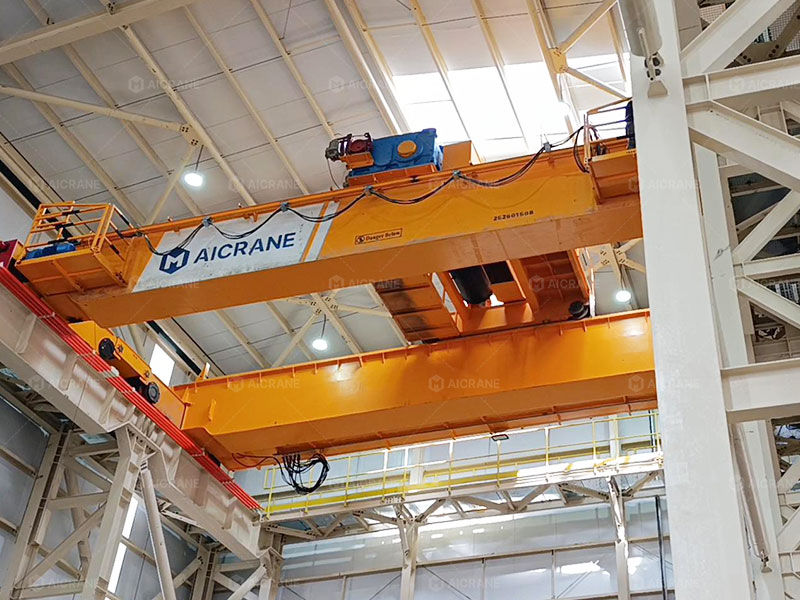
For long spans and 50-ton capacity, double girder gantry cranes are the preferred configuration. The dual-girder structure provides:
Higher lifting capacity and stiffness
Improved load distribution
Reduced mid-span deflection
Greater stability when operating in harsh outdoor environments
Single girder gantry cranes are generally not suitable for high-capacity, long-span applications due to increased deflection and lower load-bearing capacity.
1.2 Compliance with Design Codes
Engineers must adhere to internationally recognized design standards such as FEM, DIN, ISO, GB/T, and CMAA. These standards define requirements for:
Structural safety factors
Allowable stress
Deflection limits
Dynamic load calculations
Fatigue resistance
Strict compliance ensures the reliable, safe performance of the crane in demanding industrial environments.
2. Material Selection and Structural Strength
2.1 High-strength, Low-alloy Steel
Long-span 50-ton gantry cranes typically utilize high-strength structural steel such as Q345B, Q355B, or S355. These materials provide:
High yield strength
Excellent resistance to bending and torsion
Superior weldability
Enhanced durability under cyclic loads
For special environments (marine, cold regions), anti-corrosion steel or low-temperature-resistant steel may be required.
2.2 Welded Box Girder vs. Truss Girder
Box girders are ideal for heavy-duty, long-span cranes due to their:
Strong torsional resistance
Uniform load distribution
High bending stiffness
Suitability for container handling and large yard operations
Truss girders may be used when minimizing dead weight is a priority, such as for large spans with lower wind loads or when cost efficiency is critical.

3. Span Length and Deflection Control
3.1 Deflection Limits
Deflection is a major concern in long-span cranes. Excessive beam bending leads to:
Increased stress on mechanical components
Poor trolley running performance
Reduced lifting accuracy
Long-term structural fatigue
Standards typically limit allowable vertical deflection to L/800 to L/1000, depending on crane duty and load conditions.
3.2 Stiffening Reinforcements
To control deflection, engineers may employ:
Internal diaphragms
Longitudinal stiffeners
Reinforced lower flanges
Optimized girder geometry
Finite element analysis (FEA) is widely used to simulate stress distribution and optimize structural stiffness.
4. Gantry Leg and Support System Design
4.1 Rigid Leg and Flexible Leg Configuration
Most long-span gantry cranes adopt one rigid leg and one flexible leg design.
Rigid leg ensures accurate load transfer.
Flexible leg absorbs rail installation deviations and thermal expansion.
This prevents structural distortion and reduces wheel flange wear.
4.2 Wheel Loads and Rail Contact Pressure
Wheel loads must be carefully calculated to avoid:
Rail deformation
Premature wheel wear
Overloading of foundation beams
Balanced wheel distribution is essential for both performance and service life.
5. Stability, Anti-Tipping Measures, and Wind Resistance
5.1 Wind Load Considerations
Long-span cranes are more susceptible to lateral wind forces. Designers must evaluate:
Working wind pressure
Out-of-service wind speed
Storm protection requirements
Wind-resistant features often include:
Rail clamps
Ground anchors
Anemometers with automatic shutdown
Emergency braking systems
5.2 Anti-Tipping Devices
Anti-tipping mechanisms may include:
Wheel flange height optimization
Side guide rollers
Overload protection
Out-of-sync travel monitoring
Sway reduction for the hoist system
These designs ensure stability during both travel and lifting operations.
6. Hoisting System and Trolley Design
6.1 Hoist Mechanism
A 50-ton long-span gantry crane typically uses:
A double-drum hoist
High-efficiency motors (IE3 or IE4)
Hardened gear reducers
High-strength wire ropes
Fail-safe brakes
To enhance performance, European-standard hoist technology with frequency inverters is commonly used to achieve:
Smooth lifting
Accurate positioning
Reduced load swing
Lower mechanical wear
6.2 Trolley Design
The trolley should be lightweight yet rigid. Key design considerations include:
Optimized wheelbase for reduced beam stress
Compact arrangement for maximizing lifting height
Shock-absorption design to reduce vibration
Maintenance-friendly layout
7. Traveling Mechanism and Synchronization Systems
7.1 Long-Travel Drive System
Long-span cranes require stable, synchronized travel to ensure safety. Common features include:
Frequency inverter control
Soft-start mechanisms
Anti-skewing monitoring
Double-wheel drive on both sides
7.2 Anti-Skewing Control
Skewing is more common in long-span cranes due to rail imperfections. Solutions include:
Electronic anti-skew sensors
Closed-loop control systems
Mechanical linkage or differential adjustment
Real-time data monitoring
Effective anti-skew design reduces stress on the gantry frame and improves operational reliability.
8. Power Supply Systems
8.1 Cable Reel System
Ideal for long travel distances, cable reels ensure stable power transmission.
8.2 Bus Bar System
Widely used in container yards and industries with high duty cycles, offering:
Low maintenance
Strong weather resistance
High current capability
9. Environmental and Site Condition Considerations
Design must consider:
Temperature extremes (freezing or desert environments)
Humidity and corrosion levels
Seismic conditions
Dust, chemicals, or marine atmosphere
Available installation space
Ground conditions for rail foundation
Corrosion-resistant paint systems, hot-dip galvanizing, stainless pins, and sealed components may be added for harsh environments.
10. Customization for Specific Industry Requirements
Depending on the application, gantry cranes may include:
Cantilevers for extended lifting range
Rotating spreaders
Automatic positioning systems
PLC-based control
Remote monitoring and diagnostics
Sway control systems
Precise inching speed control
Industries like precast concrete, metallurgy, and shipbuilding often require specialized attachments or extra-heavy duty work cycles.
Conclusion
Long-span 50-ton gantry crane design is a highly technical process that must carefully balance capacity, span, structural strength, stability, and environmental factors. By optimizing the girder structure, selecting the right materials, ensuring precise wheel load distribution, and implementing advanced control systems, manufacturers can deliver gantry cranes that are safe, durable, and highly efficient for modern industrial operations. Proper design not only improves lifting performance but also significantly reduces downtime, maintenance costs, and long-term structural fatigue—ensuring reliable operation for decades.


Comments