


Determining Maximum Load Capacity of a Workshop Overhead Crane
- blog@ellsenbridgecrane.com
- Nov 27, 2025
- 5 min read

Overhead cranes are indispensable pieces of equipment in industrial workshops, factories, and warehouses. They are used to lift, move, and precisely position heavy loads that would be impossible to handle manually. However, operating an overhead crane safely requires a deep understanding of its maximum load capacity. Exceeding this capacity can lead to catastrophic failures, posing serious safety risks to personnel and causing expensive damage to equipment and materials. Determining the maximum load capacity of a workshop overhead crane involves careful consideration of several engineering, operational, and environmental factors.

Understanding Overhead Crane Types and Their Capacities
Before discussing the methodology to determine load capacity, it is important to understand the different types of workshop overhead cranes. The two most common types are:
Single Girder Overhead Cranes: These cranes have one main girder and are typically used for lighter loads. Their capacity generally ranges from 1 ton to 20 tons.
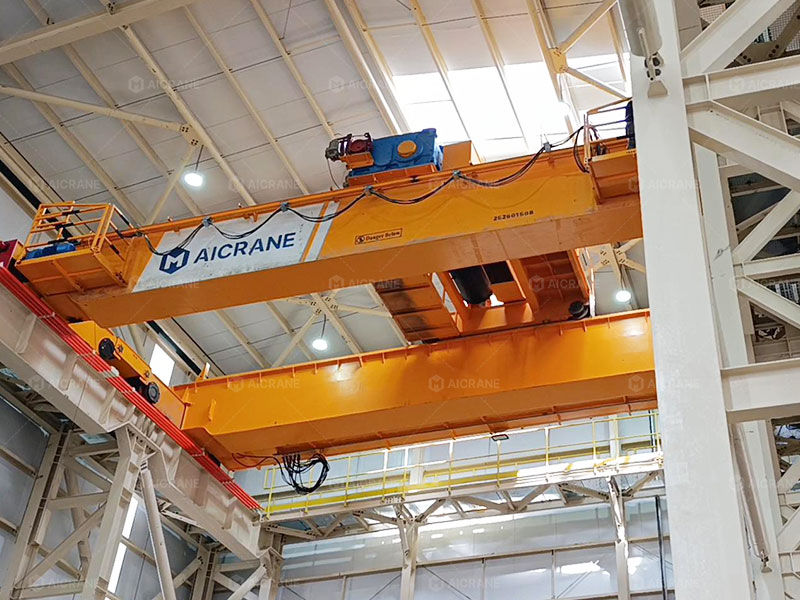
Double Girder Overhead Cranes: Equipped with two main girders, these cranes provide greater stability and are capable of lifting heavier loads, often exceeding 100 tons.
Other variations, such as light-duty workshop cranes or European-standard cranes, may have specific design enhancements that affect their maximum safe load.
The crane type and design standards are foundational in estimating the maximum capacity because the structure, hoist, trolley, and supporting mechanisms are engineered for specific load ranges.
Key Factors in Determining Maximum Load Capacity
The maximum load capacity of a workshop overhead crane is not a single number pulled from a catalog. It is the result of detailed engineering analysis, incorporating multiple factors:
1. Structural Strength of the Crane
The crane’s structural components—main girders, end trucks, bridge beams, and supporting columns—must be capable of supporting the maximum load without excessive deflection or failure. Engineers calculate:
Bending stresses in girders.
Shear stresses in supports.
Deflection limits to ensure safe lifting and precise load handling.
The crane’s maximum capacity is limited by the weakest structural element. For example, a hoist may be rated for 20 tons, but if the bridge girder cannot safely carry that weight, the crane’s overall capacity must be lower.
2. Hoist and Trolley Capacity
The hoist, which physically lifts the load, and the trolley, which moves the hoist along the bridge, are crucial determinants of load capacity. Each has a manufacturer-specified rated load:
Hoist Load Rating: This includes safety margins. Overloading the hoist can cause mechanical failure or chain/cable breakage.
Trolley Load Rating: The trolley must handle the weight of both the load and the hoist itself, especially during dynamic movements.
A crane’s maximum load cannot exceed the lower limit between the hoist and the bridge girder.

3. Span and Lifting Height
The span—the distance between the runway rails or end supports—affects the bending moment on the crane’s girder. Longer spans increase stress on structural elements, reducing the safe load limit. Similarly, higher lifting heights may introduce dynamic effects, such as sway and oscillation, which effectively reduce the maximum safe load.
4. Duty Classification
Overhead cranes are classified by operating duty, usually following ISO, FEM, or CMAA standards, which define factors like:
Frequency of load lifting.
Average working load.
Impact or shock loads during acceleration and deceleration.
Cranes with higher duty classifications (e.g., CMAA Class D or E) are designed for frequent, heavy, or dynamic operations. A crane designed for light-duty applications may not safely lift its rated load under continuous or rapid cycles, necessitating a derating factor.
5. Dynamic Load Factors
During operation, the actual load on the crane is not static. Lifting, lowering, or traveling with a load generates dynamic forces. Factors such as acceleration, deceleration, and load swing can amplify the stresses on structural components. Engineers apply dynamic load factors to the rated load to ensure safety.
For example, a 10 ton overhead crane may experience peak dynamic forces equivalent to 12 tons during rapid acceleration. Accounting for these factors reduces the maximum allowed working load.
6. Environmental and Operational Conditions
Workshops may have conditions that affect crane capacity:
Temperature extremes can reduce the strength of steel components.
Corrosive or humid environments may weaken structural integrity over time.
Uneven runways or poorly maintained rails can create additional stresses during travel.
These conditions may require derating the crane’s capacity below the nominal rated load to ensure safe operation.
7. Safety Margins and Regulations
Safety standards require overhead cranes to operate below their ultimate structural limits. Commonly, a safety factor of 1.25 to 1.5 is applied to account for uncertainties in load distribution, material variability, and operational errors. Regulatory bodies such as OSHA (in the U.S.) and ISO (internationally) mandate adherence to these factors.
8. Load Distribution
The shape and configuration of the lifted load influence how the crane carries weight. Uneven or off-center loads generate additional moments and can reduce maximum capacity. Engineers must calculate the center of gravity and load distribution to avoid exceeding the crane’s structural limits.
Steps to Determine Maximum Load Capacity
Determining the maximum load capacity of a workshop overhead crane involves a structured approach:
Review Manufacturer Specifications: Begin with the rated capacity of the hoist, trolley, and crane structure.
Analyze Structural Components: Calculate bending, shear, and deflection limits of girders, end trucks, and runway supports.
Factor in Duty Classification: Adjust capacity based on operational frequency and impact loads.
Apply Dynamic Load Factors: Consider forces induced by acceleration, deceleration, and load swing.
Evaluate Environmental Conditions: Derate capacity for temperature, corrosion, or uneven runway conditions.
Consider Safety Margins: Apply appropriate safety factors in line with regulatory standards.
Assess Load Distribution: Ensure the maximum load is balanced and positioned correctly relative to the crane’s center of gravity.
Tools and Methods for Calculation
Modern engineering tools aid in precise determination of maximum load capacity:
Finite Element Analysis (FEA): Simulates stresses and deflections in crane components under various loads.
Load Testing: Physical testing using certified weights ensures theoretical calculations match real-world performance.
Crane Management Software: Helps track operational duty, dynamic factors, and maintenance schedules.
Conclusion
Determining the maximum load capacity of a workshop overhead crane is a multifaceted process that integrates engineering design, manufacturer specifications, operational conditions, and safety standards. It requires careful consideration of the crane’s structural strength, hoist and trolley ratings, span and lifting height, duty classification, dynamic forces, environmental factors, and load distribution.
Adhering to calculated load limits is essential to prevent structural failure, ensure the safety of personnel, and maintain the longevity of the crane. By following rigorous engineering analysis and implementing proper maintenance and inspection protocols, workshop managers can ensure their overhead cranes operate efficiently, safely, and reliably at their maximum designed capacities.
Understanding these principles not only protects human life and expensive equipment but also maximizes productivity in industrial workshops. Ultimately, a well-designed, correctly rated overhead crane is the backbone of a safe and efficient material handling system.


Comments