


How to Prevent Double Girder Gantry Crane Tipping When Handling Heavy or Long Loads

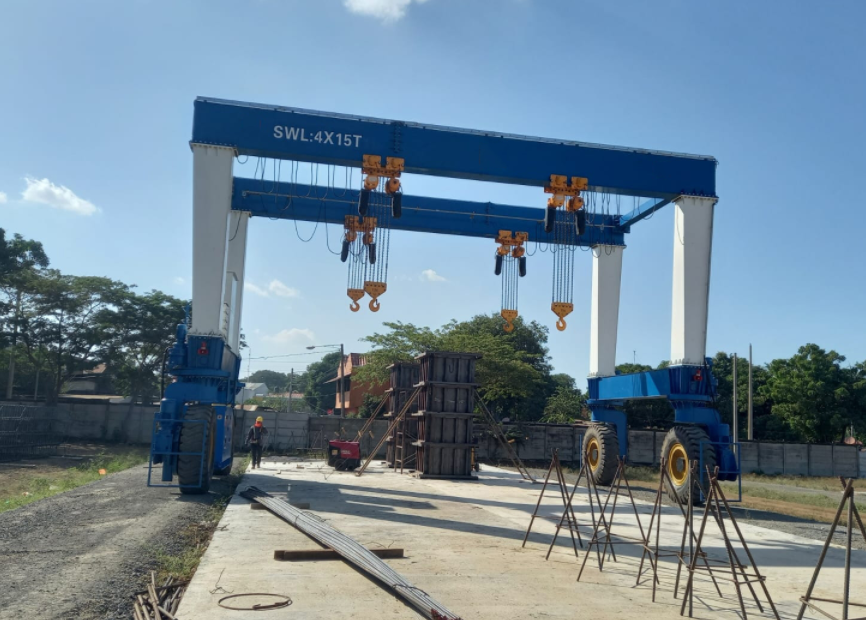
Double girder gantry cranes are widely used in heavy industrial applications such as steel yards, prefabrication plants, shipyards, and construction sites. Their robust structure, high lifting capacity, and stable operation make them essential for handling heavy or oversized loads. However, when dealing with extremely heavy, long, or unevenly distributed materials, one of the most critical operational risks is crane tipping. Preventing tipping is not only a matter of equipment protection but also vital for ensuring the safety of operators, workers, and infrastructure.
This article provides a comprehensive guide on how to prevent tipping incidents when using a double girder gantry crane to lift heavy or long loads. It covers engineering considerations, preparation steps, operational strategies, equipment configuration, and safety management practices.

1. Understand the Main Causes of Tipping
To effectively prevent tipping, operators and facility owners must first understand the most common causes. These include:
1.1 Overloading
Exceeding the crane’s rated lifting capacity—including the load weight, spreader weight, and lifting attachments—can cause instability and tip-over risk.
1.2 Off-center or Uneven Load Distribution
Heavy or long loads with shifting centers of gravity can cause the crane to lean or tilt, especially during traveling.
1.3 Excessive Wind Forces
Outdoor gantry cranes are highly susceptible to wind. Long loads create a large sail area, increasing wind pressure that may cause tipping.
1.4 Improper Ground Conditions
Soft or uneven surfaces reduce wheel traction and compromise stability, particularly for rail mounted gantry cranes (RMG) or rubber tired gantry cranes (RTG).
1.5 Side Pulling or Diagonal Lifting
Not lifting vertically introduces lateral forces that can cause sudden instability.
Understanding these causes helps establish the right preventive measures before each lift.
2. Conduct a Comprehensive Pre-Lift Assessment
Before lifting any heavy or long load, a detailed assessment must be performed by qualified personnel.
2.1 Verify Weight and Center of Gravity
Use weighing tools, load charts, or engineering drawings to confirm the exact weight.
Identify the true center of gravity, especially for steel beams, precast concrete, machinery, or irregular components.
If the load has shifting components (e.g., liquid tanks), add safety margins.
2.2 Evaluate Load Length and Geometry
Long loads behave differently during lifting due to bending, inertia, and wind resistance.The longer the load, the more critical the lifting method must be.
2.3 Assess Site Conditions
Check:
Ground conditions (hardness, compaction, and leveling)
Crane alignment on rails
Wheel blocks and rail clamps
Weather conditions
Obstructions or tight spaces
This assessment should determine whether the lifting plan must be adjusted.

3. Use the Right Lifting Attachments and Spreader Beams
3.1 Spreader Beams for Long Loads
Using a spreader beam helps distribute load weight evenly across the hoists, preventing stress imbalance and reducing tipping risk.
3.2 Multiple Slings or Balanced Lifting Points
Choose equal-length slings.
Use certified lifting chains.
Ensure symmetrical lifting to prevent tilting.
3.3 Adjustable Modular Spreader Beams
These allow precise control of load balance, especially for loads with unusual center-of-gravity positions.
3.4 Use Tag Lines for Load Control
Tag lines help control load sway and rotation, especially essential for long or wind-sensitive items.
4. Maintain Proper Crane Configuration
4.1 Verify Gantry Level and Structural Condition
A double girder gantry crane must be perfectly level for safe lifting. Check:
Leg alignment
Girder straightness
Wheel alignment
Rail straightness and wear
4.2 Ensure Hoists and Trolleys Move Smoothly
Any sticking, uneven movement, or jerkiness can shift the load and destabilize the crane.
4.3 Test Braking Systems
Strong and responsive braking is especially critical when the crane is traveling with heavy or long loads.
5. Follow Proper Lifting and Travel Procedures
5.1 Lift Vertically—Avoid Side Pulling
The crane hook must be positioned directly above the load’s center of gravity before lifting.Side pulling introduces dangerous horizontal forces that can push the crane off its rails or cause tipping.
5.2 Lift Slowly and Check Stability
Start the lift slowly, pause at 20–30 cm above the ground, and verify:
Load balance
No excessive sway
Both hoists share load evenly
5.3 Maintain Low Traveling Height
When transporting heavy or long loads:
Keep the load as close to the ground as practical
Reduce travel speed
Ensure smooth acceleration and braking
Lower load height = lower center of gravity = reduced tipping risk.
5.4 Avoid Sudden Movements
High acceleration, abrupt stops, or sharp direction changes can destabilize the crane structure.
5.5 Use Two Cranes When Necessary
For extremely long or heavy loads, two double girder gantry cranes may be synchronized for safer lifting.However, operators must be trained in dual-crane lifting procedures.
6. Consider Environmental and Wind Safety Controls
6.1 Maximum Wind Speed Limits
Follow manufacturer-specified wind limits—usually:
9–12 m/s for lifting
15–20 m/s for out-of-service conditions
When handling long loads with large surface area, reduce wind threshold by 20–30%.
6.2 Use Anemometers
Install digital anemometers on the gantry to monitor real-time wind speed.
6.3 Stop Work During Gusts or Storms
Long loads amplify wind effects; even moderate gusts can destabilize the crane.
7. Implement Anti-Sway and Control Systems
Modern double girder gantry cranes can be equipped with advanced safety technologies.
7.1 Anti-Sway Systems
Electronic anti-sway systems help stabilize long loads by reducing pendulum motion.
7.2 Load Moment Indicators (LMI)
LMIs alert operators when the crane is approaching unsafe load conditions.
7.3 Overload Protection
Prevents the crane from lifting beyond rated capacity.
7.4 Automatic Slowdown Zones
These systems automatically reduce speed in specified areas, increasing safety during load handling.
8. Ensure Operator Competence and Clear Communication
8.1 Training and Certification
Operators must be trained in:
Load charts
Long load behavior
Center of gravity identification
Dual hoist or dual crane operation
8.2 Use Standard Hand Signals or Radios
Clear communication between operators and riggers is essential during long load handling.
8.3 Assign a Dedicated Spotter
A spotter ensures that load trajectory remains safe and crane behavior remains stable.
9. Regular Maintenance to Prevent Tipping Risks
Routine inspections and preventive maintenance programs significantly reduce the risk of crane instability.
9.1 Daily Inspections
Check:
Hoist brakes
Wheel condition
Rail alignment
Limit switches
Anti-sway systems
9.2 Scheduled Structural Inspections
Inspect:
Welds
Girders
Crane legs
Bogie frames
End trucks
9.3 Hoist Synchronization Calibration
For cranes with dual hoists, synchronization must be regularly verified.
10. Develop a Site-Specific Lifting Plan
A formal lifting plan is mandatory for handling extra heavy, long, or hazardous loads.
A good lifting plan includes:
Weight and load center-of-gravity
Lifting points
Wind limits
Travel route
Ground conditions
Backup communication plan
Emergency stop procedures
This ensures every key factor is considered before the operation begins.
Conclusion
Preventing double girder gantry crane tipping when handling heavy or long loads requires a combination of engineering controls, proper equipment selection, operator training, and strict adherence to safe lifting procedures. By understanding the causes of instability and implementing a disciplined approach—from pre-lift assessment to operational monitoring—companies can greatly reduce risks and ensure safe, efficient crane operation.


Comments