


Variable Frequency Drive (VFD) Technology in Double Girder Gantry Crane Motion Control
- blog@ellsenbridgecrane.com
- Jan 25
- 5 min read

In modern industrial environments, efficiency, precision, and safety are paramount, especially when handling heavy loads. Double girder gantry cranes, widely used in steel plants, shipyards, ports, and manufacturing facilities, play a crucial role in transporting and lifting heavy materials over large areas. A key technological advancement that has significantly enhanced the performance of these cranes is Variable Frequency Drive (VFD) technology. This article explores the principles, benefits, and applications of VFDs in the motion control of double girder gantry cranes.

Understanding Double Girder Gantry Cranes
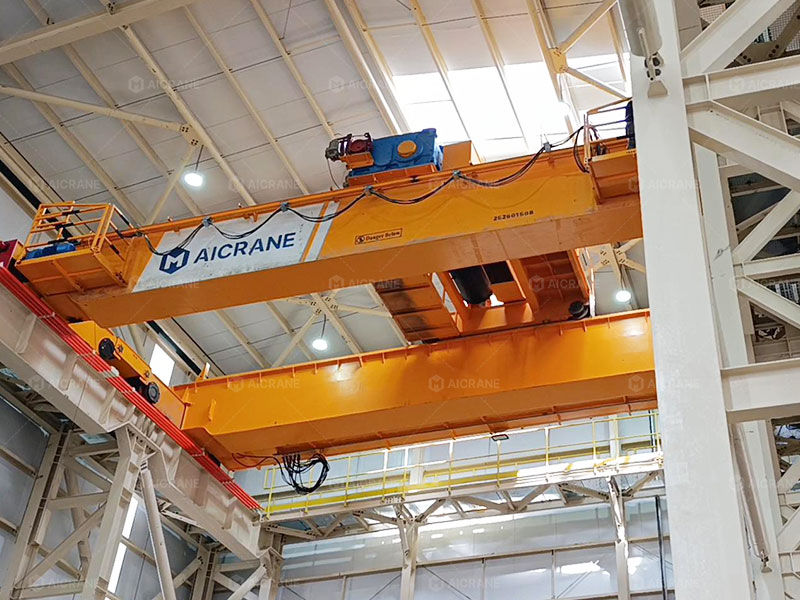
Double girder gantry cranes consist of two main horizontal beams (girders) supported on either side by legs running on rails. A hoist mechanism travels along the girders to lift, lower, and move loads horizontally. These double girder gantry cranes are capable of handling extremely heavy loads—ranging from 20 tons to over 500 tons—and can span wide industrial yards or workshops.
The crane’s movements can generally be divided into three axes:
Longitudinal travel (trolley movement along the girder)
Transverse travel (crane movement along the rails)
Hoist motion (lifting and lowering the load)
Traditionally, these movements were controlled using conventional motor starters or contactors, which often resulted in jerky starts and stops, excessive mechanical stress, and higher energy consumption. This is where VFD technology has transformed crane operations.
What is Variable Frequency Drive (VFD) Technology?
A Variable Frequency Drive (VFD) is an electronic device that controls the speed and torque of an electric motor by varying the input frequency and voltage. Essentially, it allows precise control over motor rotation speed, which translates into smooth acceleration, deceleration, and positioning of the crane.
VFDs consist of three main components:
Rectifier – Converts incoming AC power to DC.
DC Link (Bus) – Stores the converted DC energy and smooths voltage fluctuations.
Inverter – Converts DC back to AC at a variable frequency and voltage to control motor speed.
By adjusting the motor speed in real time, VFDs optimize energy usage, reduce mechanical stress, and improve operational accuracy.
Benefits of VFD Technology in Gantry Crane Motion Control
Smooth Acceleration and Deceleration One of the primary advantages of VFDs is their ability to provide smooth start and stop sequences for the crane’s motors. Sudden starts or stops can cause load sway, reduce precision, and increase wear on mechanical components. By gradually ramping up or down the motor speed, VFDs minimize jerking, improve safety, and extend the lifespan of the crane’s structural and mechanical systems.
Precise Speed Control VFDs enable variable speed operation for each axis of the crane. Operators can select the optimal speed for different tasks: slower speeds for precise positioning during loading and unloading, and higher speeds for long-distance travel with no load. This flexibility improves operational efficiency while maintaining control over heavy and sensitive loads.
Energy Efficiency Traditional motors operating at full speed consume energy even when the full torque is unnecessary. VFDs adjust motor speed to match load requirements, resulting in substantial energy savings, especially in cranes with frequent start-stop cycles or variable load operations. Studies have shown that energy consumption can be reduced by up to 30% in some gantry crane applications when VFDs are implemented.
Reduced Mechanical Wear Gradual acceleration and deceleration reduce the mechanical stress on gears, brakes, wheels, and rails. This translates to lower maintenance costs, less downtime, and longer service life for both the crane and the hoist system.
Improved Safety By controlling acceleration and deceleration, VFDs minimize load swing, which is a major safety concern in crane operations. Load swing can damage goods, injure personnel, and cause structural stress. VFDs combined with anti-sway control systems allow operators to move heavy loads safely and accurately.
Regenerative Braking Many VFDs support regenerative braking, allowing energy produced during deceleration to be fed back into the power system. This further improves energy efficiency and reduces wear on traditional braking systems.
Multi-Motor Coordination Modern double girder gantry cranes often have multiple motors driving each axis. VFDs can be synchronized to control multiple motors simultaneously, ensuring balanced movement and preventing mechanical misalignment. For example, two motors driving a wide crane beam can be controlled in perfect harmony to avoid twisting or uneven wear.

Applications of VFDs in Gantry Crane Motions
1. Hoist Motion Control:The hoist is critical for lifting and lowering heavy loads. Using a VFD, operators can control lifting speeds precisely, from slow movement for delicate placement to rapid lifting for high-volume operations. Some VFD systems integrate anti-sway algorithms to stabilize suspended loads, further enhancing precision and safety.
2. Longitudinal Travel Control:The crane’s movement along the rails can be optimized using VFDs for smooth acceleration and deceleration, reducing jolts and vibration. Variable speed control ensures that the crane can traverse long distances efficiently while maintaining precise stopping points for load alignment.
3. Transverse Travel Control:The trolley traveling along the girders benefits from VFDs by reducing load sway during lateral movement. Smooth acceleration and deceleration prevent abrupt shifts that can destabilize heavy or uneven loads.
4. Tandem Crane Operations:In many industrial applications, two double girder gantry cranes operate in tandem to lift large and heavy objects. VFDs allow coordinated motion control between the cranes, ensuring synchronized lifting, positioning, and placement, minimizing the risk of accidents.
Integration with Automation and Safety Systems
VFD technology in modern gantry crane for sale is often integrated with PLCs (Programmable Logic Controllers) and other automation systems. This integration enables advanced features such as:
Load Sway Control: VFDs can actively adjust speed to reduce swing during motion.
Positioning Accuracy: Automated systems can use feedback from encoders and sensors to position loads precisely.
Overload Protection: VFDs can monitor current and torque to prevent motor overload.
Soft Start/Stop Sequences: Programmed acceleration and deceleration curves ensure smooth operation without operator intervention.
These features enhance operational efficiency, reduce the risk of accidents, and improve overall productivity.
Challenges and Considerations
While VFD technology offers numerous advantages, its implementation in double girder gantry cranes requires careful consideration:
Initial Cost: VFD-equipped cranes have a higher upfront cost than conventional systems. However, energy savings and reduced maintenance often offset this investment over time.
Electromagnetic Interference (EMI): VFDs can generate electrical noise, which may affect sensitive equipment. Proper filtering and grounding are essential.
Complexity: Operators and maintenance personnel require training to understand VFD operation, parameter setting, and troubleshooting.
Motor Compatibility: Not all motors are compatible with VFD operation. Ensuring that hoist, trolley, and travel motors can handle variable frequency input is critical for reliability.
Future Trends
The future of VFD technology in double girder gantry cranes is closely tied to automation, IoT, and smart industrial practices:
Predictive Maintenance: VFDs equipped with sensors and connected to cloud monitoring systems can provide real-time data on motor performance, enabling predictive maintenance and reducing downtime.
AI-Powered Control: Advanced algorithms can optimize crane movement patterns, load handling, and energy usage.
Integration with AGV Systems: As autonomous vehicles become more prevalent, VFD-equipped cranes can seamlessly interact with automated guided vehicles (AGVs) for fully automated material handling.
Conclusion
Variable Frequency Drive technology has revolutionized the operation of double girder gantry cranes by providing precise motion control, energy efficiency, and improved safety. By enabling smooth acceleration, deceleration, and multi-motor coordination, VFDs enhance operational performance while reducing mechanical wear and energy consumption. As industries move toward more automated and data-driven solutions, VFD-equipped cranes will continue to play a crucial role in efficient, safe, and reliable heavy lifting operations. Investing in VFD technology is no longer just an option—it is a strategic necessity for modern industrial material handling.


Comments