


Why is My 20 Ton Overhead Crane Quote So High? Understanding Complexity Factors

If you’ve recently requested pricing for a 20 ton overhead crane and felt surprised—or even shocked—by the quote, you’re not alone. Many buyers expect a relatively straightforward cost based mainly on lifting capacity. However, in reality, the price of an overhead crane is influenced by a wide range of engineering, safety, and operational factors that can significantly increase the final quotation.
Understanding these complexity factors is essential not only for evaluating whether a quote is reasonable, but also for optimizing your investment and avoiding overpaying for unnecessary specifications.
Below is a detailed breakdown of why your 20 ton overhead crane quote may be higher than expected.

1. Lifting Capacity Is Only One Part of the Price
A common misconception is that crane pricing is primarily determined by tonnage. While a 20 ton overhead crane does indicate its maximum lifting capacity, it does not reflect:
Span length
Lifting height
Duty class (usage intensity)
Working environment
Structural design requirements
Two cranes with the same 20 ton capacity can differ in price by 30%–100% depending on these factors.
For example:
A 20 ton crane for light workshop use (A3–A4 duty) may be relatively affordable
A 20 ton crane for steel mill operations (A6–A8 duty) can cost significantly more due to reinforced structures and higher-grade components
2. Crane Type Has a Major Impact on Cost
Not all overhead cranes are built the same. The two most common types are:
Single Girder Overhead Crane
Lighter structure
Lower steel consumption
Generally more economical
Suitable for moderate workloads
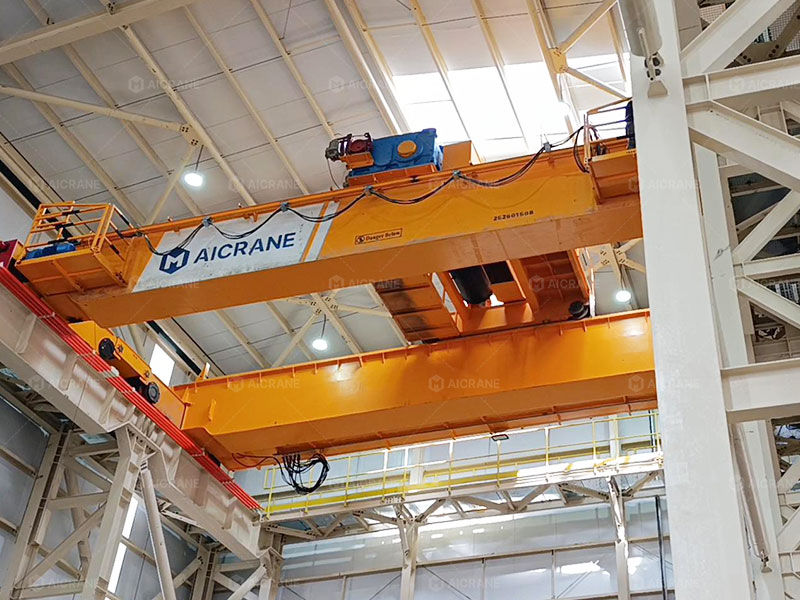
Double Girder Overhead Crane
Heavier-duty design
Higher lifting height capability
Stronger structural rigidity
Often required for 20 ton and above industrial applications
A 20 ton double girder overhead crane can cost substantially more than a single girder model because it uses:
More steel material
Dual girder beams
Larger trolley system
Higher-strength end carriages
If your application requires a double girder configuration, that alone significantly increases the quote.

3. Span Length Directly Affects Steel Cost
The span (distance between runway beams) is one of the most underestimated cost drivers.
A longer span requires:
Heavier main girders
Reinforced structural design
Increased deflection control
More steel material overall
For example:
10–15 meter span: standard cost baseline
20–30 meter span: significantly higher steel consumption
30+ meter span: engineering-intensive, much higher pricing
Even a few extra meters of span can dramatically increase the crane’s structural weight—and thus its price.
4. Duty Class (A3–A8) Changes Everything
Overhead cranes are classified based on usage intensity:
A3–A4: Light to moderate use
A5–A6: Medium-heavy industrial use
A7–A8: Heavy-duty continuous operation
A higher duty class means:
Stronger steel structure
Higher fatigue resistance design
Premium motors and gearboxes
Better thermal management
Longer service life components
For a 20 ton overhead crane, upgrading from A5 to A7 duty can increase the price significantly because the crane must be engineered for continuous, high-frequency operation in demanding environments such as:
Steel mills
Foundries
Precast concrete yards
Heavy fabrication plants
5. Hoisting System Quality (Big Cost Driver)
The hoist system is one of the most critical and expensive components.
Price differences depend on:
Motor Brand and Performance
Standard motors vs European premium motors
Variable frequency drive (VFD) systems
Heat resistance and duty rating
Hoisting Speed Options
Single speed (cheaper)
Dual speed (moderate increase)
VFD stepless control (higher cost, smoother operation)
Wire Rope and Hook Systems
Standard rope vs high-strength imported wire rope
Single hook vs heavy-duty forged hooks
A high-performance hoist system can add thousands of dollars to the overall bridge crane price—but it directly affects safety, precision, and long-term maintenance costs.
6. Electrical System and Automation Level
Modern overhead cranes are no longer just mechanical lifting devices. Many 20 ton cranes now include advanced electrical systems such as:
PLC control systems
Remote radio control
Anti-sway technology
Load monitoring systems
Smart safety sensors
Each of these features increases cost but also significantly improves:
Operational safety
Load precision
Operator efficiency
Accident prevention
For industrial buyers, especially in steel or logistics sectors, these systems are often essential rather than optional.
7. Working Environment Requirements
Your operating environment plays a major role in pricing.
Standard Workshop Environment
Normal temperature
Low dust
Indoor installation
→ Lower cost configuration
Harsh Industrial Environment
High temperature (steel mills, foundries)
Corrosive conditions (chemical plants, marine yards)
Outdoor exposure (rain, wind, salt air)
→ Higher cost configuration
In harsh environments, cranes require:
Heat-resistant coatings
Anti-corrosion treatment
IP-rated electrical enclosures
Reinforced structural steel
These upgrades can significantly increase the final quotation.
8. Custom Engineering and Non-Standard Design
A major reason your quote may be higher is customization.
Standard cranes are mass-produced and relatively cost-efficient. However, most real-world applications require customization such as:
Special span or height
Non-standard runway structure
Explosion-proof design
Multi-hook or dual lifting systems
Special lifting attachments
Engineering customization requires:
Structural recalculations
Additional design validation
Manufacturing adjustments
Testing and certification
Custom cranes are always more expensive than standard configurations.
9. Material Cost and Steel Market Fluctuations
Steel is one of the largest cost components in overhead crane manufacturing. When steel prices rise globally, crane prices follow.
A 20 ton overhead crane uses a significant amount of:
Structural steel beams
Reinforcement plates
End carriage assemblies
Even small fluctuations in steel pricing can noticeably affect your quotation.
10. Transportation, Installation, and Logistics
Many buyers overlook “hidden” costs included in a crane quote:
International shipping fees
Packaging and container loading
Port handling charges
Inland transportation
Installation guidance or onsite service
For large cranes like a 20 ton overhead system, logistics can represent a meaningful portion of the total cost.
If your supplier includes installation supervision or technical support, that also increases the upfront quotation but reduces installation risk.
11. Safety Standards and Certification Requirements
Different markets require different compliance standards:
FEM / ISO standards (Europe)
OSHA compliance (USA)
Local industrial certifications
Meeting strict safety regulations requires:
Higher-grade components
Additional testing
Documentation and certification costs
A crane built to higher safety standards will always cost more—but also delivers better long-term reliability and compliance assurance.
12. After-Sales Service and Warranty Coverage
A comprehensive quote often includes:
Warranty period (12–36 months or more)
Spare parts supply
Remote technical support
On-site troubleshooting assistance
Premium suppliers factor these services into the total price. While this increases initial cost, it significantly reduces operational downtime risk.
Conclusion: A Higher Quote Is Not Always Overpricing
A 20 ton overhead crane is not a “standard product”—it is a complex engineered lifting system tailored to specific industrial requirements.
Your quote may be higher due to a combination of:
Structural design (single vs double girder)
Span and lifting height
Duty class and usage intensity
Hoist and electrical system upgrades
Custom engineering requirements
Environmental and safety standards
Logistics and after-sales service
Instead of focusing only on the price, the better approach is to evaluate:
Whether the specification matches your real operational needs
Whether any features can be optimized or simplified
Whether long-term reliability justifies the investment
In most cases, a higher-quality crane reduces maintenance costs, improves safety, and increases productivity—delivering far greater value over its lifecycle than a cheaper, under-specified alternative.


Comments