


Impact of Rigging and Slings on Double Girder Overhead Crane Capacity
- blog@ellsenbridgecrane.com
- Mar 26
- 4 min read

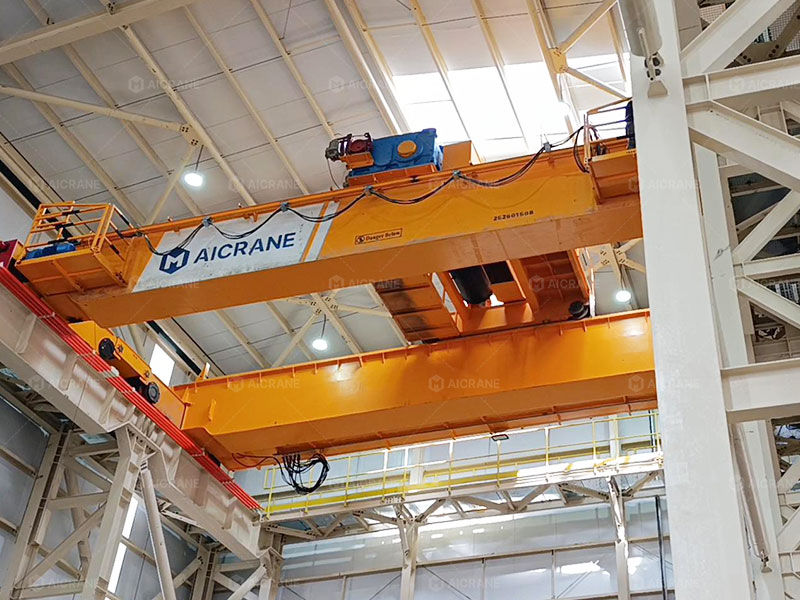
Double girder overhead cranes are a critical component in industrial operations, particularly in factories, warehouses, and heavy manufacturing facilities. These cranes are renowned for their high lifting capacity, stability, and versatility in handling heavy and oversized loads. However, while the crane itself may have a specified maximum lifting capacity, the actual capacity during operations can be significantly affected by the rigging and slings used. Understanding the impact of rigging and slings on crane capacity is essential for safe, efficient, and cost-effective lifting operations.

Understanding Rigging and Slings
Rigging refers to the equipment and techniques used to attach loads to the crane hook, ensuring that the load can be lifted, moved, and positioned safely. Slings are a key component of rigging and come in various forms, including wire rope slings, chain slings, synthetic web slings, and round slings. Each type of sling has distinct characteristics, including strength, flexibility, abrasion resistance, and elongation properties, which influence the crane’s operational performance.
Proper selection and use of rigging are as critical as the crane’s mechanical specifications. Incorrect rigging can reduce the effective load capacity of the crane, increase the risk of accidents, and even damage both the load and the double girder crane.
The Effect of Rigging Angle
One of the most important factors affecting crane capacity is the angle at which slings are used. When a load is lifted with slings that are not vertical, the crane experiences additional stress due to the distribution of forces. For instance, a single vertical sling exerts a direct load on the crane hook equal to the weight of the load. However, when the load is lifted using multiple slings at an angle, the tension in each sling increases, sometimes dramatically.
The relationship between sling angle and tension can be expressed mathematically. As the sling angle decreases from vertical, the tension in the sling increases exponentially. For example, if a sling forms a 45-degree angle with the horizontal, the tension on that sling can be about 41% higher than the load’s weight. This means that even if the crane is rated for a certain capacity, improper sling angles can cause the effective lifting capacity to drop below safe limits. Operators must carefully calculate sling angles and adjust lifting plans to avoid overloading.

Sling Type and Load Distribution
The type of sling used also has a major impact on crane capacity. Wire rope slings, for instance, are highly durable and have minimal stretch, which makes them suitable for lifting very heavy and rigid loads. However, they are less flexible than synthetic slings and can be difficult to maneuver around irregularly shaped objects. Chain slings are extremely strong and resistant to heat, making them ideal for lifting hot materials in steel mills or foundries, but they are heavier and can create localized pressure points on the load.
Synthetic slings, including web slings and round slings, offer flexibility and cushioning, reducing the risk of load damage. However, synthetic slings have lower resistance to abrasion and cutting, and their strength can degrade over time due to environmental factors such as UV exposure, chemicals, and moisture. Understanding these material properties is vital for ensuring that the slings do not become the limiting factor in the overhead crane capacity.
Rigging Configuration and Load Stability
Rigging configuration—the method by which slings are attached to the load—also influences crane performance. Single-leg, double-leg, or multiple-leg configurations distribute the load differently and affect the crane’s stability. For example, a four-leg sling configuration with a load spreader can evenly distribute the weight across the crane hook, reducing point loads and increasing safety. Conversely, an uneven or asymmetrical rigging setup can create unbalanced forces, leading to load swinging, tilting, or even uncontrolled rotation. These effects not only reduce the effective lifting capacity but also pose serious safety hazards.
The use of specialized hardware, such as shackles, hooks, and spreader bars, is another critical consideration. Each component introduces its own weight, mechanical properties, and potential stress points. Even high-quality rigging hardware can become a limiting factor if not matched correctly to the crane and load specifications.
Safety Factors and Rigging Wear
The effective capacity of a crane is also influenced by safety factors embedded in the rigging and sling design. Each sling has a rated working load limit (WLL), which is often determined by applying a safety factor to its breaking strength. Operators must ensure that the combined WLL of all slings in use does not exceed the crane’s rated capacity. Additionally, rigging wear and tear—such as fraying, corrosion, or kinking—reduces the effective capacity of slings. Regular inspection and maintenance are therefore essential to maintain safe lifting conditions and ensure that rigging does not become the weakest link in the lifting chain.
Environmental Considerations
Environmental conditions can further affect the interaction between rigging and crane capacity. High temperatures, moisture, and exposure to chemicals can weaken synthetic and wire rope slings over time. Cold environments can make synthetic materials brittle, while heat can reduce the tensile strength of wire and chain slings. Operators must account for these factors when planning lifts, often reducing the crane’s effective capacity to accommodate environmental degradation.
Training and Operational Expertise
Finally, the impact of rigging and slings on crane capacity is closely tied to operator knowledge and expertise. A skilled crane operator understands not only the mechanical limits of the crane but also how rigging configurations, sling angles, and load characteristics interact to affect overall capacity. Proper training ensures that operators can select appropriate slings, calculate load tensions, adjust lifting angles, and respond to dynamic conditions during lifts. Poor rigging practices, even with high-quality equipment, can compromise the crane’s effective capacity and lead to accidents.
Conclusion
While double girder overhead cranes are designed for high lifting capacity, the effectiveness of this capacity is heavily dependent on the rigging and slings used. Factors such as sling type, angle, configuration, wear, and environmental conditions can all influence the safe and effective load a crane can lift. To maximize safety and performance, operators must carefully plan lifts, select appropriate rigging equipment, and continuously monitor and maintain both the crane and its rigging components.
By recognizing that the crane’s rated capacity is only a part of the equation, and that rigging and slings are equally critical, industrial operations can optimize lifting efficiency, extend equipment life, and most importantly, protect personnel and assets. The integration of high-quality rigging, proper training, and rigorous inspection routines ensures that double girder overhead cranes operate safely and reach their full potential in industrial lifting applications.


Comments