


Safety First: Monitoring Double Girder Gantry Crane Capacity in Real-Time

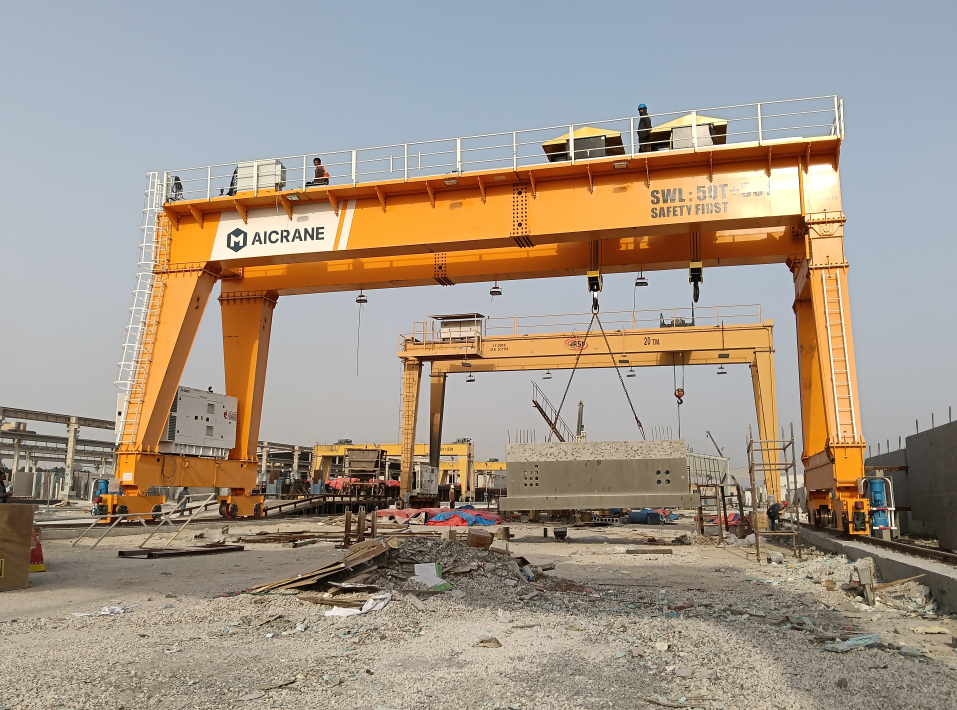
In the domains of heavy manufacturing, port logistics, and large-scale infrastructure construction, double girder gantry cranes serve as the backbone of material handling operations. Due to their robust structural configuration—characterized by two primary load-bearing girders—these cranes are frequently specified for high-capacity, long-span lifting tasks. However, as the mass of handled objects increases, so does the systemic risk of structural failure or operational accidents. In modern, high-intensity industrial environments, relying solely on traditional mechanical moment limiters is no longer sufficient to guarantee compliance or structural integrity. The integration of real-time load monitoring systems has emerged as a critical technological requirement to ensure operational safety, maintain regulatory compliance, and extend the functional lifecycle of the equipment.

I. Analysis of Load Dynamics in Double Girder Gantry Cranes
The double girder gantry crane is engineered for superior stability and torsional rigidity compared to its single-girder counterparts. Its rated capacity—the maximum load it is designed to lift under specific conditions—is determined by the structural parameters of the main girders, the trolley’s drive mechanism, and the hoist’s mechanical strength.
In practice, however, the load exerted on the crane is rarely static. Beyond the sheer mass of the lifted object, the total stress experienced by the structure is the result of a complex interplay of forces. These include dynamic loads generated by the acceleration and deceleration of the hoisting motor, inertial forces during trolley or bridge travel, and external environmental variables such as wind loading, particularly in outdoor port or yard operations.
In the absence of real-time data, operators are often forced to rely on estimates or static weight checks performed prior to the lift. This creates a significant blind spot. For instance, pendulous motion or non-vertical lifting—where the center of gravity of the load is offset—can cause extreme stress concentrations on one of the main girders, potentially exceeding the design safety threshold even if the total mass is within the rated limits.
II. Core Architecture of Real-Time Load Monitoring Systems
A robust real-time monitoring system is not merely a weight display; it is a multi-layered integrated system composed of sensor acquisition, data processing, and alarm execution.
1. Sensor Acquisition Layer
The accuracy of any monitoring system is contingent upon the quality and placement of its sensors.
Hoist Rope Tension Sensors: Typically installed at the dead-end of the hoist rope or the sheave pin, these sensors provide a direct measurement of the tension applied to the hoisting mechanism.
Strain Gauges: By affixing strain gauges to critical structural sections of the main girders, the system can measure physical deformation in real-time. This allows for the assessment of structural stress, providing data on whether the steel framework is approaching its yield strength.
Position and Tilt Sensors: Integration with position encoders and inclinometers ensures that the trolley's location is known at all times, allowing the control system to cross-reference the current load against the specific "Load Chart" or "Derating Curve" applicable to that specific bridge position.
2. Data Processing Core
At the heart of the system is an industrial PLC (Programmable Logic Controller) or a dedicated crane control unit. This processor operates at high sampling rates to filter out signal noise—such as vibrations caused by trolley movement or wind-induced oscillations. The unit calculates the net dynamic load and compares it instantaneously against the manufacturer’s load-capacity curves.
3. Warning and Executive Layer
The system provides feedback via human-machine interfaces (HMI), visual alarm beacons, and audible alerts. When the load reaches 90% of the rated capacity, the system triggers a pre-warning signal. Upon reaching 100%, the control unit initiates a logic interlock, restricting the hoist from further upward motion while allowing for controlled lowering. This ensures that the crane is prevented from entering an overloaded state before human error can cause an incident.
III. Operational and Maintenance Value of Real-Time Monitoring
The transition from "reactive safety" to "process control" offers quantifiable benefits to industrial facilities.
1. Mitigation of Overload-Related Failure
Overloading is the primary contributor to permanent structural deformation and mechanical fatigue of drive systems. By calculating dynamic load factors in milliseconds, the monitoring system can cut power to the hoist drives before catastrophic mechanical stress occurs. This prevents not only equipment damage but also the risk of load drops, which are critical safety incidents.
2. Prevention of Metal Fatigue
All structural materials possess a fatigue limit. Continuous operation at or near the rated capacity accelerates the formation of micro-fractures in the steel structure and welded joints. A real-time system tracks the "Load History" of the crane. By analyzing this data, maintenance teams can shift from time-based maintenance to condition-based maintenance. This allows for more precise scheduling of non-destructive testing (NDT), ensuring that structural weaknesses are identified and rectified before they evolve into failures.
3. Optimization of Operational Efficiency
Beyond safety, the system serves as an analytical tool for efficiency. By analyzing load-cycle data, management can assess the utilization rate of the equipment. If data reveals that the crane is consistently operating at only 50% capacity, it suggests that the equipment may be over-specified for the task, or conversely, that the workflow is not utilizing the crane’s full potential. This data-driven approach aids in reducing energy consumption and operational overhead.

IV. Implementation and Engineering Best Practices
Implementing a monitoring system requires strict adherence to engineering standards to ensure reliability.
Calibration and Zero-Point Compensation: After installation, the system must undergo full-load calibration. Because environmental factors like thermal expansion and contraction can affect sensor output, the system must utilize automatic zero-point compensation to maintain accuracy throughout seasonal temperature fluctuations.
Electromagnetic Compatibility (EMC): Gantry cranes operate in electrically "noisy" environments, with high-frequency drive interference (VFDs) and heavy motor currents. The monitoring system must be engineered with industrial-grade shielding and follow strict EMC cabling protocols to prevent signal corruption or false alarms.
Fail-Safe Design: As a safety-critical system, the monitoring unit must adhere to "fail-safe" logic. If a sensor signal is lost, a circuit is opened, or the processor enters an error state, the system must default to a state that locks the crane’s motion, requiring manual intervention or diagnostic clearance. It must never allow a blind operation if the integrity of the monitoring data is in question.
V. Conclusion
As industrial operations continue to move toward higher levels of automation and data transparency, real-time load monitoring is no longer an optional upgrade; it is an essential component for the safe and stable operation of double girder gantry cranes. Through precise data acquisition and scientific threshold management, organizations can minimize equipment downtime, reduce accident risks, and establish a data-driven model for full-lifecycle equipment management. Safety is, at its core, the mastery of physical parameters, and real-time monitoring remains the most effective technology to achieve this objective.

Comments